To Our Valued Patients,
The payment site is currently under maintenance, please call us to make a payment. This will be temporary until our processing company gets us a new payment link.
To Our Valued Patients,
The payment site is currently under maintenance, please call us to make a payment. This will be temporary until our processing company gets us a new payment link.

Medically Reviewed by: Christopher J. Hart, MD, FACS (NPI: 1295797371) & William H. Johnson, MD, FACS
"When treating conditions like diverticulitis or colon polyps, our priority is a 'bowel-sparing' approach. By utilizing laparoscopic and robotic technology, we can perform precise resections through small incisions. For our patients in Johns Creek and the surrounding North Georgia areas, this means significantly less pain, a faster return of bowel function, and a much quicker transition back to a normal diet and lifestyle compared to traditional open surgery."
Dr. Christopher J. Hart & Dr. William H. Johnson
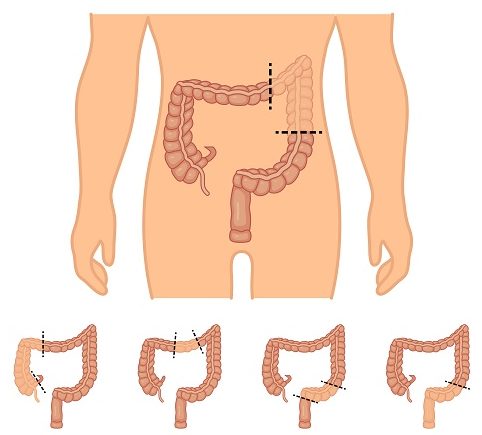
The colon is the tubular structure at the lower portion of the gastrointestinal tract. Also called the large intestine or large bowel, the colon helps absorbs water and holds waste until it is ready to be expelled. A colon resection is usually the removal of a part of the colon, although occasionally the entire colon requires removal. There are a number of conditions that may require a colon resection:
Most colon surgery can now be performed laparoscopically. This allows the surgeon to perform the procedure through several small incisions instead of one large incision. There is less pain and scarring, the hospital stay is usually shorter, and the recovery is much quicker with the laparoscopic technique. This technique is now used for most all types of conditions requiring colon resection, including colon cancer. In recent studies, this technique has been found to be equivalent to the open procedure in the oncologic treatment of colon cancers while offering all the benefits of a laparoscopic approach.
The work-up for colon procedures typically includes a colonoscopy or barium enema, as well as the standard preoperative medical evaluation. Additional work-up may be necessary depending on the condition. We will work closely with your gastroenterologist or primary care physician to complete the work-up. A special bowel-cleansing regimen will be necessary to empty the colon and rectum prior to surgery. Please make sure to follow the surgeon’s instructions carefully and contact us if you have problems taking the preparation.
We will be happy to talk to you further to see if you are a candidate for a laparoscopic colon resection.
A colon resection (colectomy) is commonly performed to treat complications of diverticulitis, large precancerous polyps that cannot be removed via colonoscopy, inflammatory bowel disease (IBD), or colon cancer. Dr. Hart and Dr. Johnson specialize in using minimally invasive techniques for these conditions whenever possible.
Thanks to our "Enhanced Recovery After Surgery" (ERAS) protocols, most patients stay in the hospital for only 2 to 4 days. This is significantly shorter than traditional surgery, as laparoscopic techniques allow the digestive system to wake up and function much sooner.
In the vast majority of elective laparoscopic cases performed at Johns Creek Surgery, a colostomy is not required. Our surgeons are experts at reconnecting the healthy ends of the colon (anastomosis) during the same procedure. We will discuss your specific case in detail during your consultation.
Most patients can resume light walking immediately. You will typically be on a modified diet for 1 to 2 weeks to allow the intestinal connection to heal. Most of our patients return to work and normal non-strenuous activities within 2 to 3 weeks.
Johns Creek surgery Center located in Johns Creek, GA, attracts patients from all over the metro Atlanta area and beyond including Macon, Sandy Springs, Alpharetta, Milton, Roswell, Duluth and Marietta, GA. Our board certified experts perform a variety of surgical procedures for patients in a comfortable, caring environment.